Twenty years after earning my BA in Fine Arts, I returned to college to study horticulture. There I was sitting in the Entomology laboratory staring into the dissecting microscope at the magnified eyes of a moth. I was startled! Bugs had terrified me since I was a little girl. That fear quickly turned into awe. Those microscopes opened up an entirely new world for me to experience the garden and its inhabitants in a new way, magnified and magnificent.
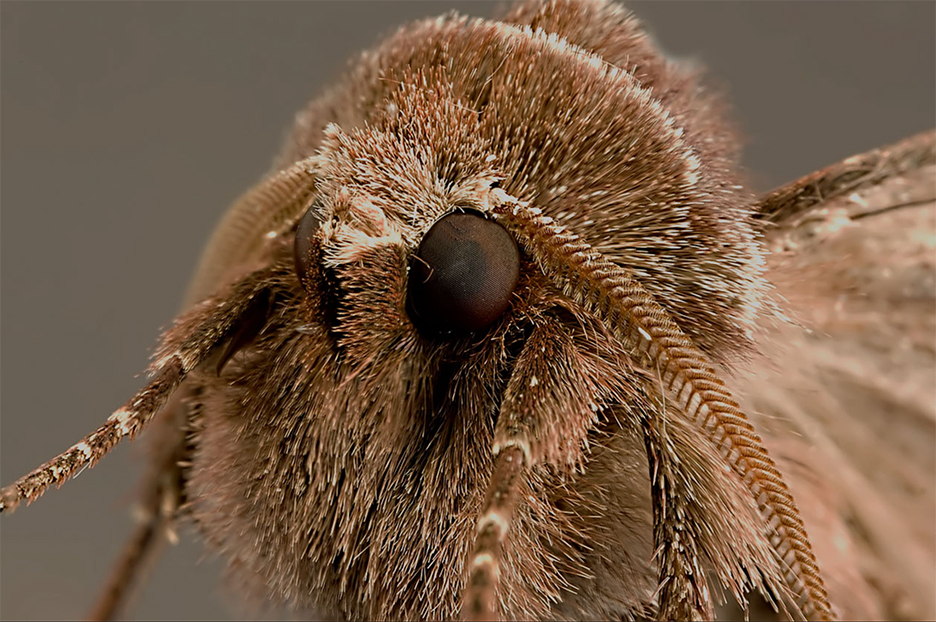
Those, and other moments of discovery, eventually reshaped my artistic practice by creeping into my work in inquisitive steps and leaps, rather than in a straight line.
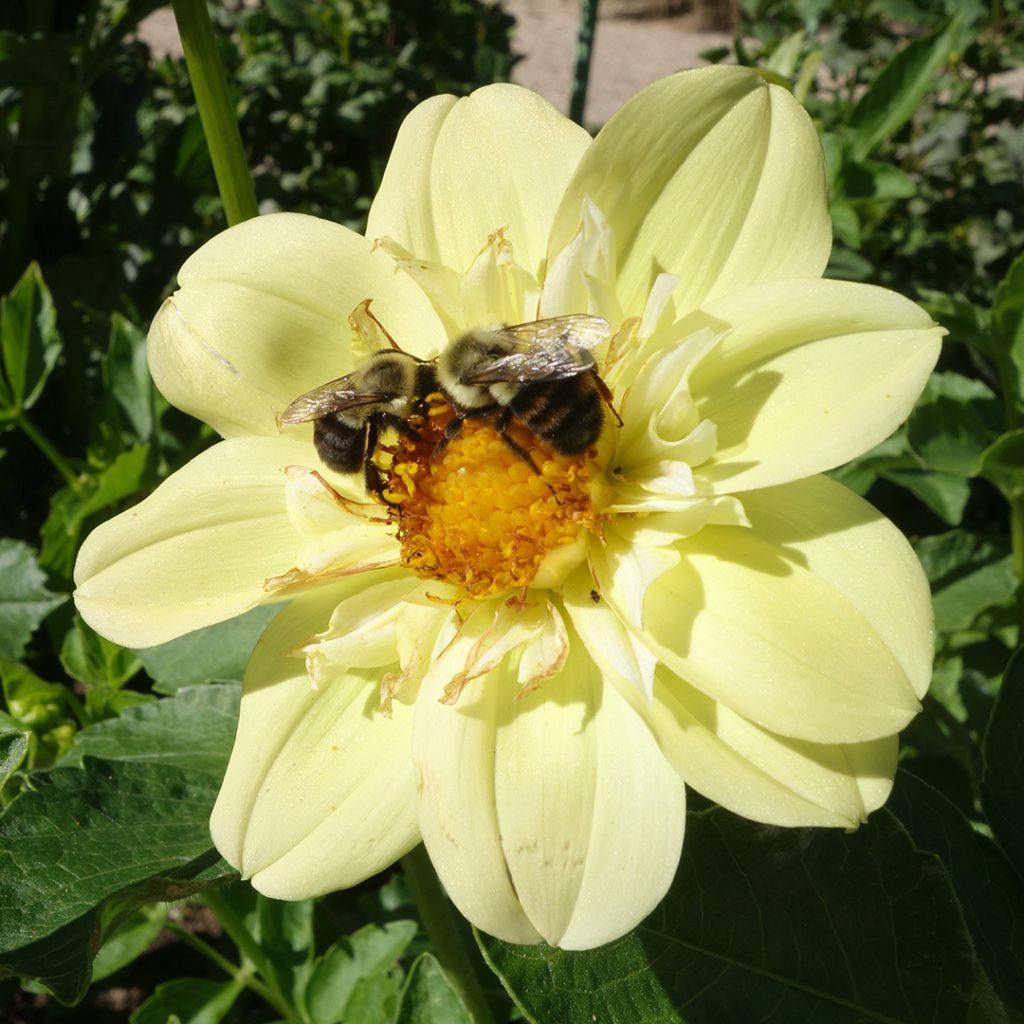
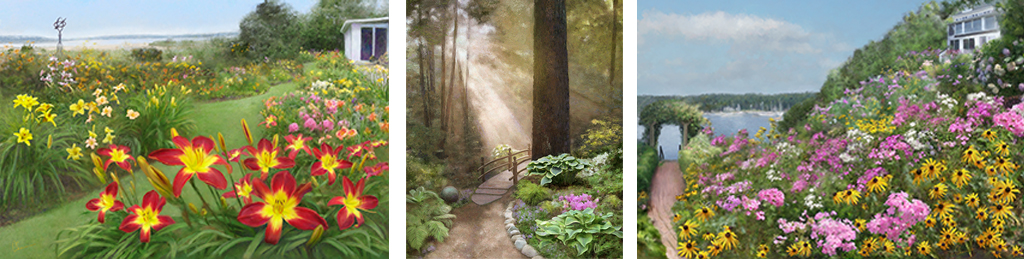
As a lifelong gardener, I’ve spent countless hours bent over flower beds, weeding, deadheading, and staking flowers within inches of my eyes. As a visual learner, this proximity to the plants encouraged my close observation of the colors and texture on a single flower, the architecture of the plants, and the internal structures thick with pollen.
Fascinated by what I was closely observing in my garden, I was driven to document for others so they, too, could appreciate the details as I saw them. What followed was two years of study and work in botanical illustration at the New York Botanical Garden.
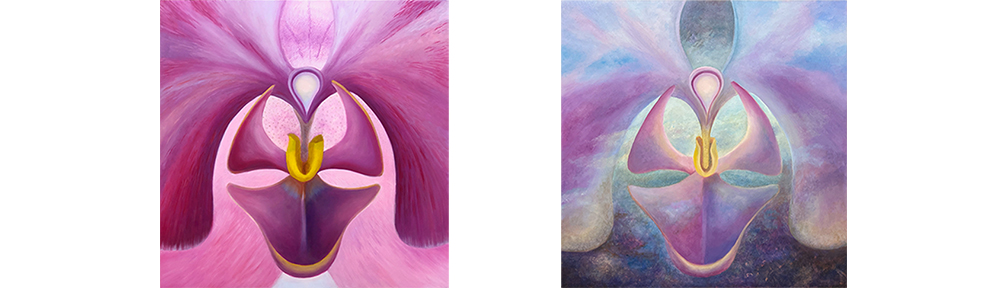
Magnifying lenses I wore over my reading glasses at that time enabled me to draw and paint the fine details I observed on the flowers. I was awed by the architectural structures displayed on the external and internal parts of the flowers. They are distinctly varied from flower to flower, just as the faces of each of my family members are unique.
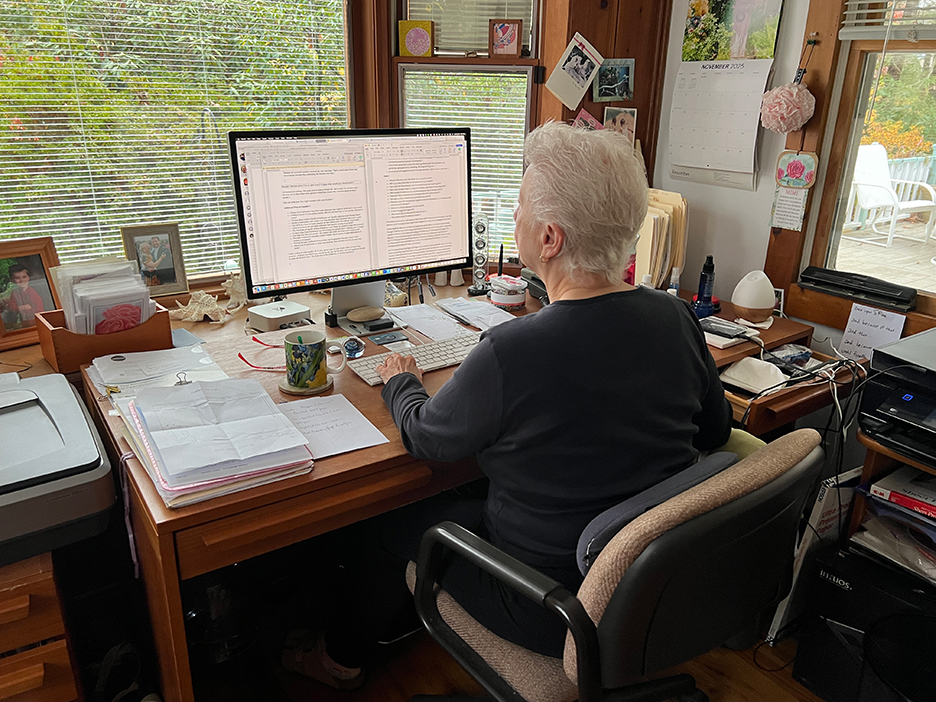
My four-decade-long career in computer graphics had trained my eye for detail. However, enlarging images to pixel size on a screen cannot compare to the living detail found in the garden. There is an immeasurable difference between closely and delicately studying the details of a live flower with a hand-held magnifier and placing thousands of dollars’ worth of cameras, computers, and monitors between the petals and yourself.
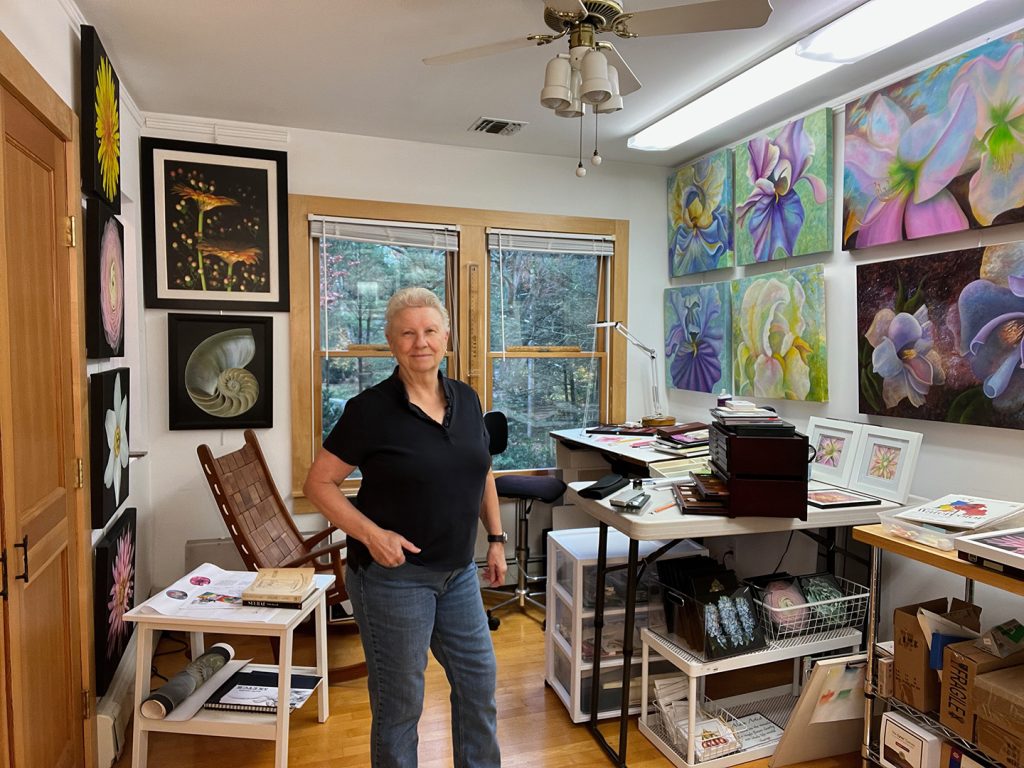
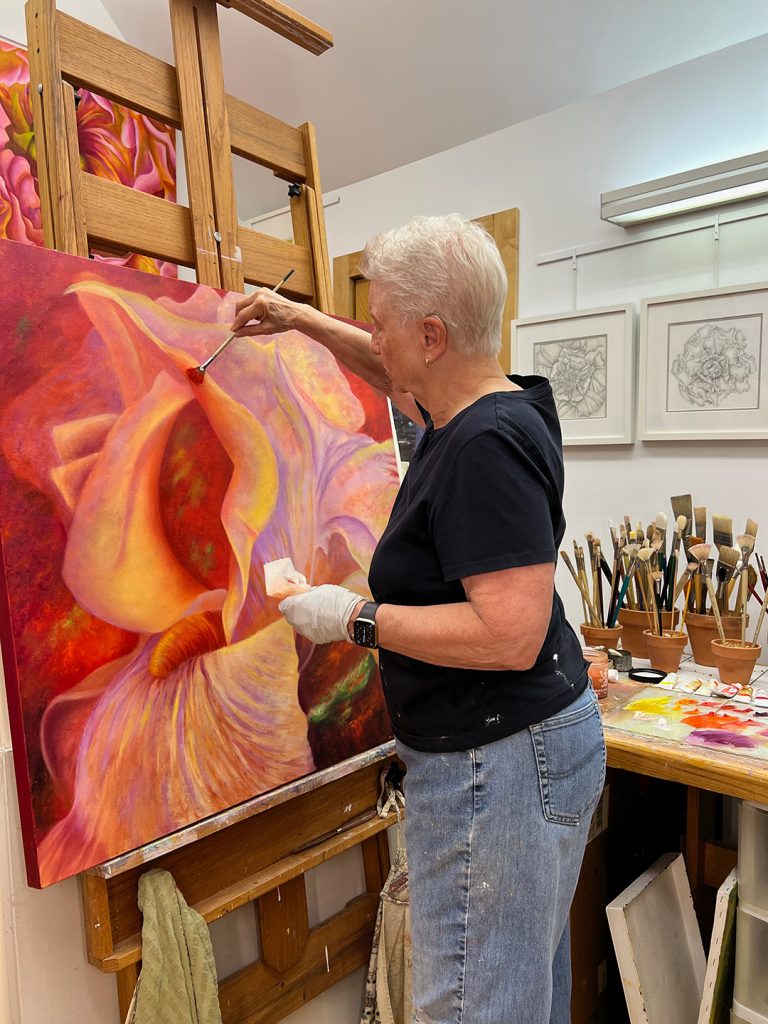
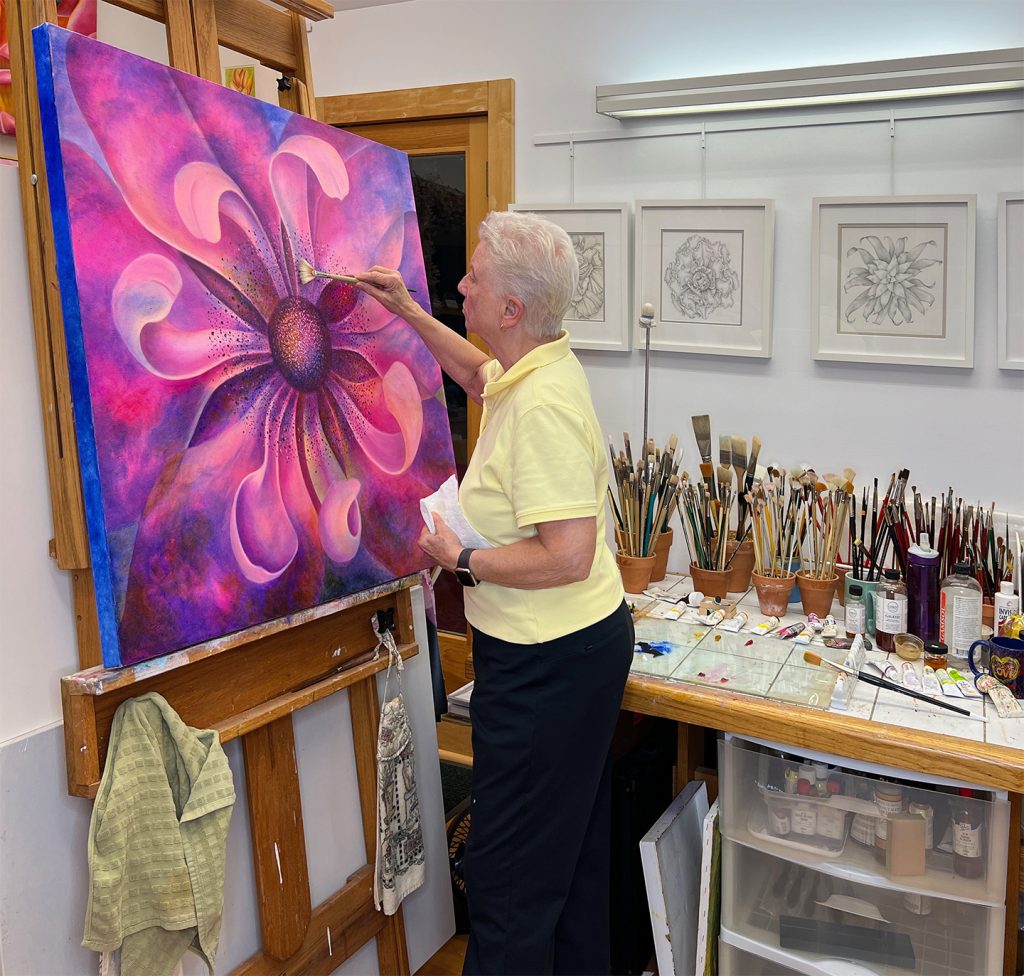
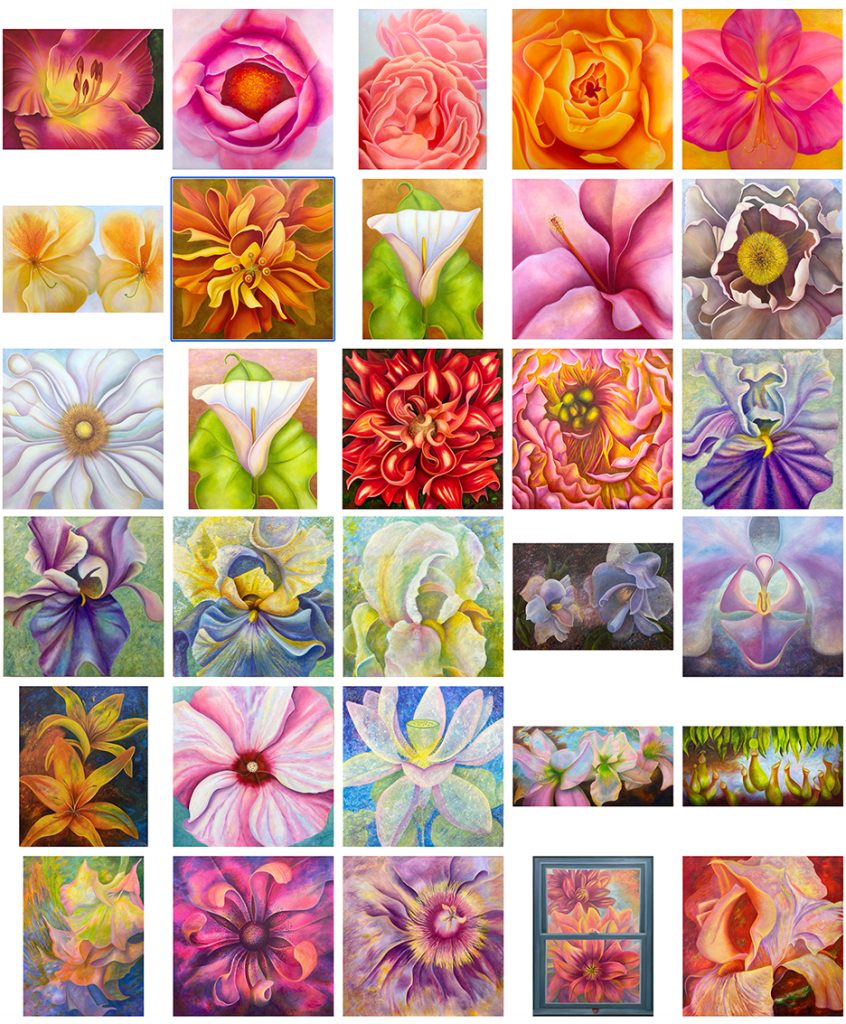
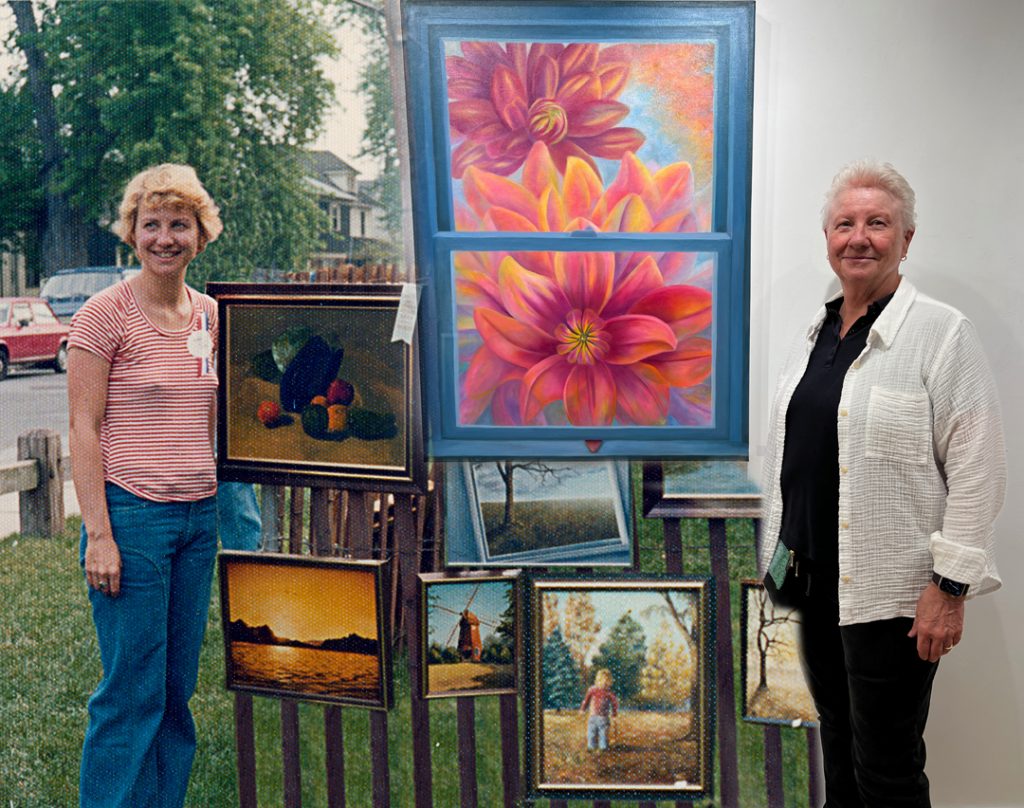
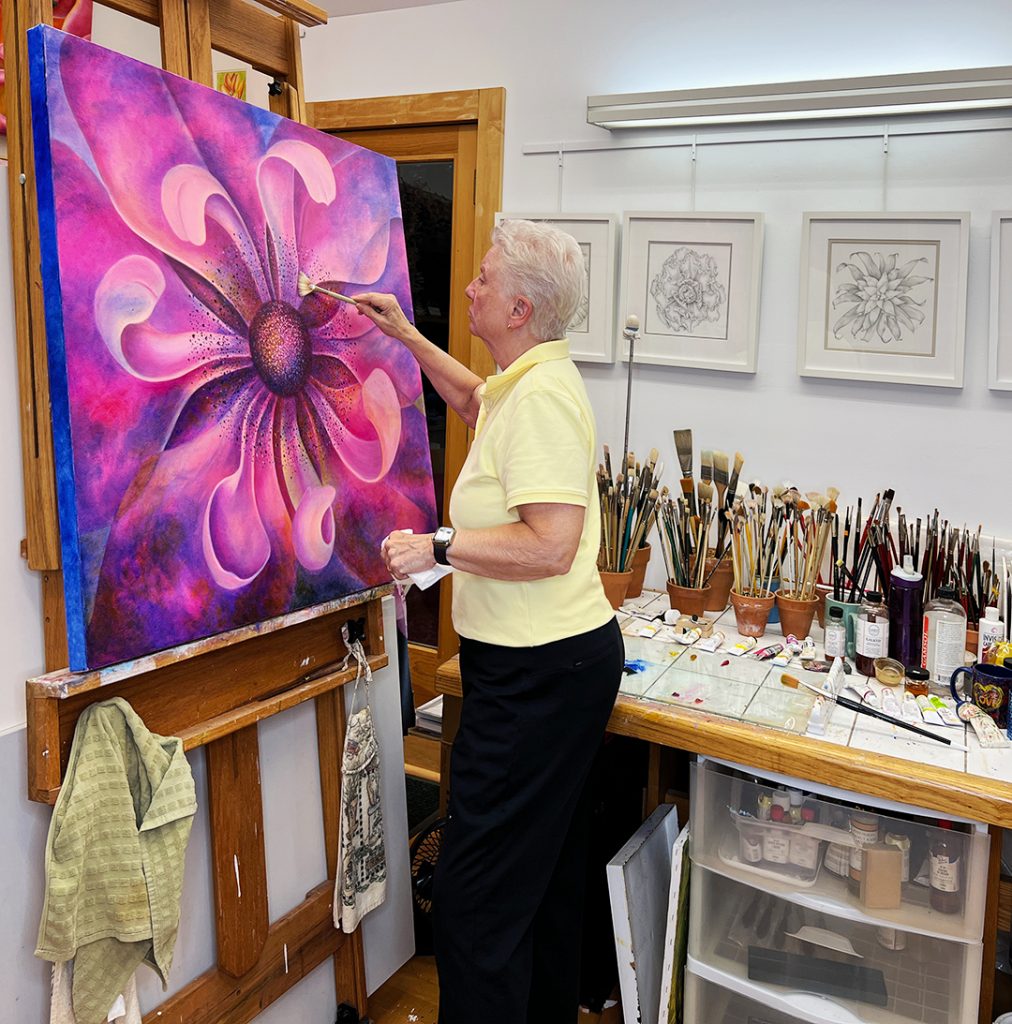
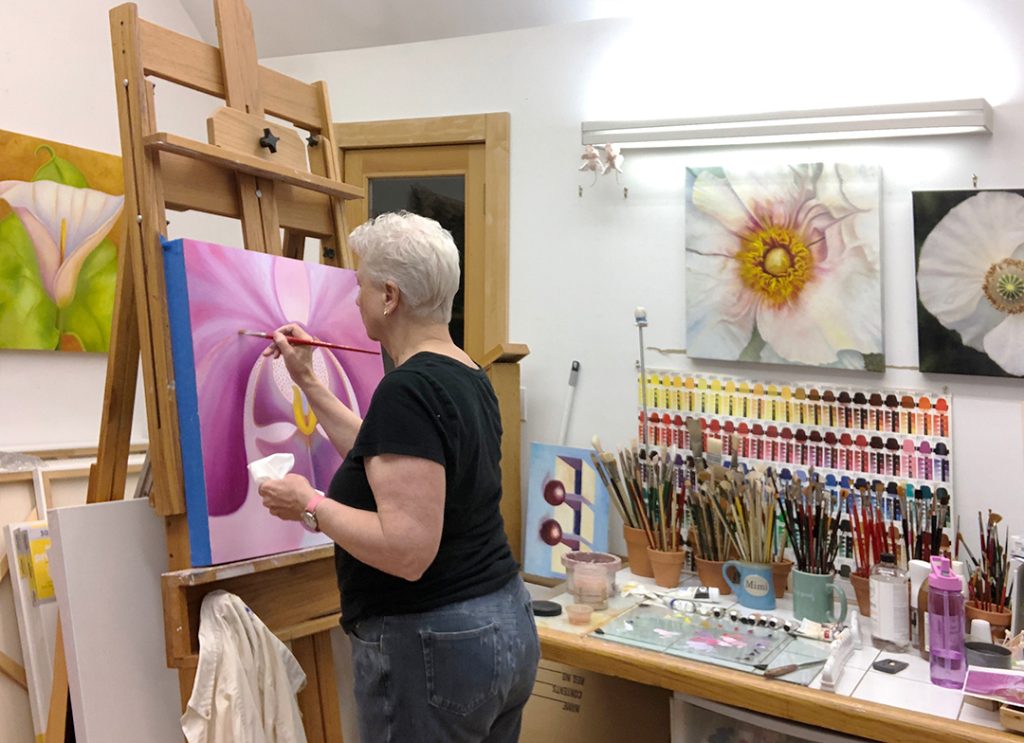
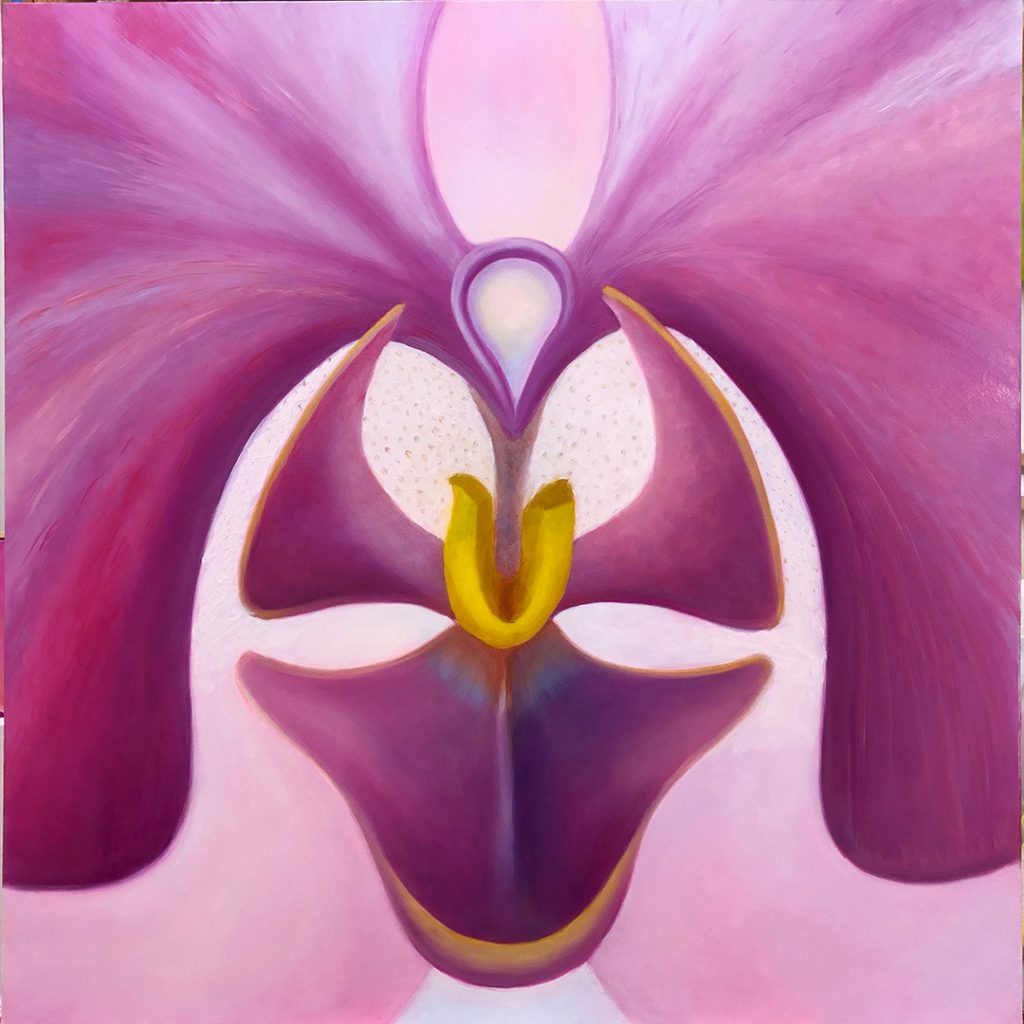
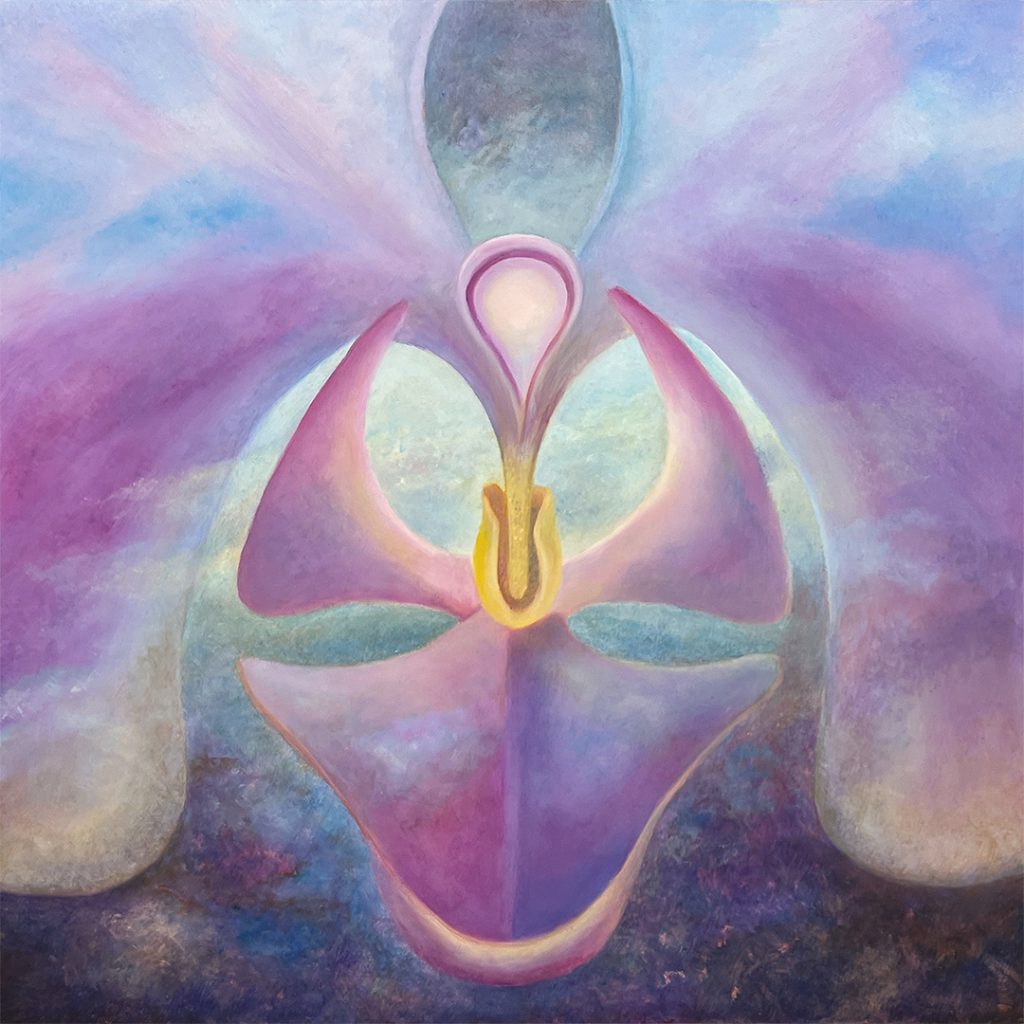
As my interest and observations in the garden evolved, so did my artwork. Although I had painted gardens earlier, I began to focus more closely on individual flowers. As my flowers grew in size, so did my canvases, now measured in feet rather than inches.
I intend for my bold paintings to call across the room, demanding attention so that others can experience the same sense of awe that I initially felt while staring at the moth through the microscope. Each painting I make, is an invitation to observe what is often missed, the seductive curves, the hidden spaces where pollen is found, and the architecture designed specifically for the production of seed and the continuation of the species.
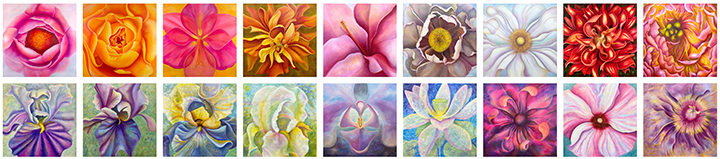
In magnifying these flowers to human scale, I’m not just sharing what I’ve seen, I’m asking viewers to do what I do, contemplate our singular role in nature. I observe the markings on the soft centers of peonies that guide pollinators to fertilize the flowers that will produce the seed pods necessary to continue the evolution of the species. I paint in bright colors to attract attention, like brilliant purple petals attract hummingbirds to salvia. My colors want to be noticed, to stimulate wonder, the wonder I feel when seeing and thinking about the purpose of just one individual flower and one individual human being.
My oversized flowers ask viewers to slow down and observe, in the way that I slow down in the garden while I’m pruning and grooming the plants. With my eyes and nose so close to these flowers, my mind insists on being in awe of the broad diversity of approaches each plant has to fit itself into the mesh of existence. Each has carved itself a niche with a community of willing collaborators to continue their cycle of life.
Like the flowers that need others to help them survive across generations, my oversized flowers wait patiently on the wall, hoping a viewer will notice the niche each one has carved out, and leave thinking about the interdependence we share with plants, the community each of us needs in order to continue.
Revised from the original publication on Substack 2025-09-06: Why I Paint Big Flowers